
Table of Contents
- Short summary
- What is simultaneous interpreting?
- What is consecutive interpreting?
- How to choose the right type of interpreting for your event?
- How event dynamics influence the choice between simultaneous and consecutive interpretation?
- When to choose which form?
Do you have a question or want to discuss a planned event?
Contact us — we will help you choose the perfect solution for your event.
- Phone: +48 502 386 666
- Email: biuro@oiww.eu
Simultaneous vs Consecutive Interpreting - Differences and when to use them
| Parameter | Simultaneous Interpretation | Consecutive Interpretation | ||
| Event duration
|
No extension (1–2 second lag)
|
Extends the event by 50–100%
|
||
| Number of interpreters |
Team (minimum 2 per language) |
1 interpreter (up to ~4 hours) |
||
| Equipment requirements |
Booth, console, receivers / RSI platform, mixer
|
Standard microphone and room PA |
||
| Number of languages |
Unlimited (true multilingual) |
Usually one foreign language |
||
| Budget required |
Higher (equipment + technical support + 2+ interpreters) |
|
Lower (fee for one interpreter) |
|
|
Best for |
Conferences, AGMs, panels, hybrid events, webinars |
B2B dinners, negotiations, short speeches |
||
|
Participant comfort |
High – listen in their own language without interruptions |
Lower – must wait for the translation |
||
|
Interpreter workload |
Very high (work in pairs) |
High, but less intense |
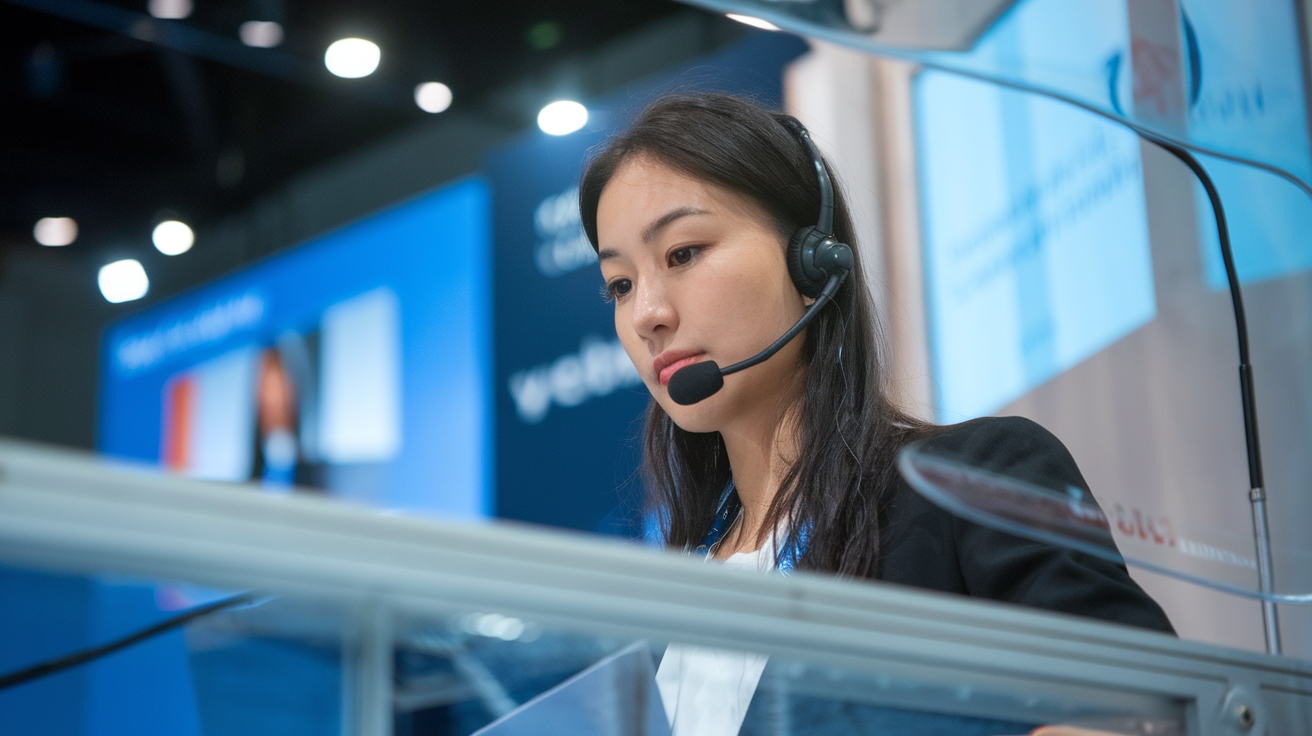
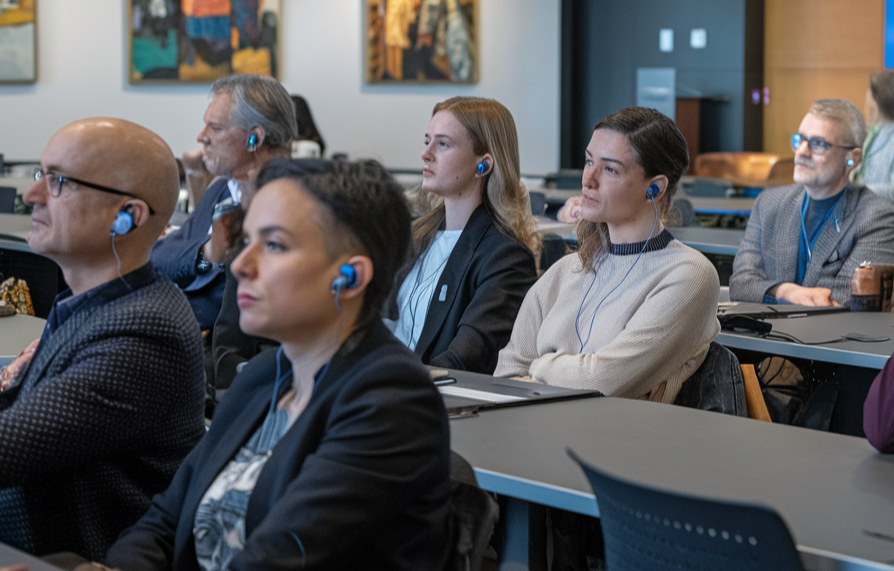
Simultaneous interpretation takes place in real time. Tthe interpreter speaks in parallel with the speaker, using a booth or infoports providing the message in a second language to the audience that listen to the interpretaer with the aid of a headset. This method does not extend the duration of the event.
Consecutive interpretation involves the interpreter translatiing a sentence or two at a time when the speaker pauses. The interpreter makes notes when the speaker is talking and uses them to relay the message to the audience in a second language using the same PA system in the room as the speaker. This roughly doubles the length of the speech but does not require specialised audio equipment.
The choice between these two forms has a major impact on participant comfort, the event schedule, and the overall professional impression. Choosing between simultaneous and consecutive interpreting is one of the most important decisions when organising a multilingual event. It affects not only the quality of communication, but also the duration of the event, participant experience, costs, and logistics.
1. Short summary
When to choose simultaneous interpretation
- You are organising an event for participants who speak several different languages.
- You have a fixed agenda that cannot be extended in time.
- You are running a hybrid or fully online event (using dedicated RSI audio channels on platforms such as Zoom or Teams).
- You need interpretation during a site visit or factory tour using portable infoport systems.
2. What is simultaneous interpretation?
Consecutive interpretation is delivered in blocks. The speaker talks for a short period (typically 1–3 minutes), then pauses. The interpreter, standing nearby, renders the content into the other language using notes taken during the speech.
When to choose consecutive interpretation
- The meeting involves a very small group (e.g. intimate B2B negotiations or a business dinner).
- The event consists only of a short speech, toast or brief remarks.
- There is no physical space for an interpretation booth.
- You have a limited budget and want to avoid equipment costs.
3. What is consecutive interpretation?
-
The optimal choice depends on the perspective of the client, the event organiser, the interpreter and the AV technician. Discuss the decision with all stakeholders during the planning stage.
1. Client / commissioning company perspective
What matters most: time, image and participant experience.
- Simultaneous - The event runs to schedule. Participants do not get bored waiting. The company appears professional and modern. Especially important for AGMs, industry conferences and hybrid events.
- Consecutive - The event lasts almost twice as long. Participants (especially those who understand both languages) lose concentration. With larger groups or panel discussions the effect feels tiring and unprofessional. Suitable only for very small groups (2–5 people) with no interaction or for short speaches.
Consecutive interpretation is sometimes a life saver during an event when an unexpected speaker is called out to speak to an audience that does not understand the speaker's language.
Recommendation for clients
If more than 10 people are attending or you plan any discussion, always choose simultaneous interpretation.
2. Event organiser perspective
The organiser is responsible for flow, timing and overall stage management.
- Simultaneous - Much easier time management. The agenda can be followed. Online and onsite participants have equal access to content. Requires advance planning of equipment (booth or infoports) and space for interpreters.
- Consecutive - Significantly harder. Speakers must be constantly reminded to pause. The agenda slips. During panels or spontaneous questions the organiser loses control of timing.
Practical tip:
When using consecutive interpretation, always add at least 80–100% buffer time to the agenda.
3. Interpreter perspective
- Simultaneous - Interpreters work in pairs and rotate every 20–30 minutes. They need excellent sound, visibility of the speaker and materials in advance. It is the most cognitively demanding form.
- Consecutive - The interpreter takes notes (using consecutive notation). There is more time to process the content, but excellent memory and summarising skills are required. Quality drops during long uninterrupted speeches.
Interpreters strongly prefer the simultaneous mode for events longer than 30–40 minutes.
4. AV / Event technician perspective
- Simultaneous - Requires a solid technical setup: ISO booth or infoport system, separate clean audio feed for interpreters, signal distribution to receivers or online platform, and redundancy. The entire audio chain must be tested before the event.
- Consecutive - Technically simpler if the interpreter stands next to the speaker (good microphone for the speaker and optionally one for the interpreter). Fewer failure points. If the interpreter listens through the room PA, additional monitoring (stage speaker, headphones or IEMs) is needed.
Technical note:
On hybrid events with simultaneous interpretation, the technician must ensure the interpretation reaches both the room and the stream at the same quality.
4. How to choose the right type of interpretation for your event
1. Keynote / presentation
- Simultaneous - Ideal. The speaker talks naturally; the audience listens without interruptions. Flow remains smooth.
- Consecutive - The speaker must pause every 1 - 2 minutes. The presentation loses energy and the audience becomes distracted.
2. Discussion panel
- Simultaneous - Strongly recommended. Moderator, panellists and audience can interact freely while interpretation runs in parallel.
- Consecutive - Very difficult. Every contribution must be translated in turn. The discussion becomes slow and unnatural; the moderator loses control.
3. Spontaneous guest on stage or question from the floor
This is the situation that most often “kills” consecutive interpretation.
- Simultaneous - The guest takes the microphone and interpreters start immediately. Zero delay. The audience barely notices.
- Consecutive - The organiser must stop the event, explain that translation will now take place, ask the guest to speak in short segments and wait for the interpretation.
Result: loss of energy, awkwardness and reduced professionalism.
5. How event dynamics influence the choice - three typical situations
Choose simultaneous interpretation when:
- the event lasts longer than 45 minutes
- there are more than 20 participants
- you plan a panel or Q&A
- the event is hybrid or streamed
- image and participant comfort are important
Choose consecutive interpretation only when:
- the group is very small (1 - 5 people)
- there is no discussion
- it is impossible to install equipment
- the event is short and formal (e.g. official welcome speech)
6. When to choose which form?
Contact us at:
t: +48 502 386 666
@: biuro@oiww.eu

OIWW sp z o.o.
ul. Twarda 18
00-105 Warsaw
@: biuro@oiww.eu
t: +48 502 386 666
Copyright OIWW sp z o.o. 2026